
Cats & Kittens Overview
Cats and Kittens: Their Needs
Cats and kittens may be more independent than dogs, but they still require attention, care, and love.
Basic Needs:
- Play and Enrichment: Cats enjoy interactive play and need toys to keep them stimulated. A cat tree or window perch allows them to express natural behaviors like climbing and watching their environment.
- Litter Box Maintenance: Clean the litter box daily. Cats are clean animals, and a dirty litter box can lead to accidents outside the box.
- Space to Explore: Cats often like having a space to call their own. Whether it’s a cozy bed, a quiet corner, or a sunny windowsill, providing a safe space helps them feel
Kittens: Special Considerations:
- Socialization: Kittens need to learn to trust humans and may require gentle handling to become friendly, adoptable cats.
- Feeding and Weaning: Young kittens may need to be bottle-fed or weaned onto solid food, which requires close monitoring. Follow specific instructions from the Foster Team.
- Health Concerns: Kittens are more susceptible to upper respiratory infections and other illnesses than adults. Keeping an eye on their health and reaching out to the Foster Team is crucial.
Preparing for your foster kittens
Your foster kittens should start out separated from all other animals in your household and kept in a small area, such as a spare room or bathroom, where they have access to their food, water and litter box. And because kittens under three weeks old cannot regulate their body temperature, this area should also be in a warm, draft-free area. It may be a good idea to consider an area that is easy to clean up in terms of spills and litter box accidents, which will happen since the kittens are learning. Please don’t put the kittens in a garage or place that has outdoor access; those locations are not safe.
Supplies you’ll need
The shelter provides supplies to its fosters. Here’s what you’ll need to care for your foster kittens:
- At least one bowl for dry food and one for water: If you have a large litter, you will need to provide more than one bowl each for water and food.
- A supply of kitten food
- New bottle for each bottle-fed litter and formula for bottle-feeding: Breeder’s Edge/KMR or similar is preferred for bottle-feeding kittens.
- Litter box with low sides: More than one may be needed for larger litters.
- Non-clumping litter: Use pine pellets, paper litter or non-clumping clay litter.
- Heat source: Kittens can’t keep themselves warm, so you have to provide a heat source
- A soft place to sleep: Old towels or blankets work well.
- A secure sleeping area: A cat carrier with the door removed or a box laid on its side works well.
- Toys: Use kitten-safe toys that are easy to sanitize and clean. Kittens can play with them when you’re not home.
- Scratching post: Kittens need to learn to scratch on them rather than the furniture.
Kitten-proofing your home
Foster kittens are tiny and cute, but just like children, they are also very curious. They will try to get into everything to explore, so you will need to kitten-proof your home. Here are some tips:
Put away any small items that a kitten can swallow.
- Hide any breakable items, block electrical outlets and remove toxic plants
- If your kittens are staying in a bathroom, make sure that the toilet lid is closed at all times.
- Block off any spaces that the kittens could crawl into and hide in.
- When setting up your kitten room, be sure to place the litter boxes as far away from food and water as possible.
Scheduling appointments for your foster kittens
During the time that you foster kittens, you’ll need to make some appointments — to pick up and drop off your kittens, take them in for vaccines and spay/neuter, and pick up supplies.
Types of appointment:
- Vaccines/Deworming: Once kittens are 4 weeks old, they should come to the shelter every two weeks for vaccine boosters.
- Illness: Due to incubation times of different illnesses, kittens may need to be seen for a medical appointment if they get sick or injured. Some examples of these are: Upper Respiratory Infections (URIs), diarrhea, worms, etc.
- Medication/Supply Pick-Up: You may also need to set up an appointment when you are needing more foster supplies, food, medication refills, and returning your fosters.
KITTEN RESOURCES
Kitten Season 101
On-Demand Recording: https://bit.ly/BFCIKSV
Handout: https://bit.ly/BFCIKSH
Bottle-Feeding & Care of Orphaned Kittens
On-Demand Recording: https://bit.ly/BFCIBFKV
Handout: https://bit.ly/BFCIBFKH
Taming Feral Kittens for Adoption
On-Demand Recording: https://bit.ly/BFCITFKV
Handout: https://bit.ly/BFCITFKH
Caring for your foster kittens
Feeding
- Slurries: Slurries are simply wet kitten food mixed with kitten formula that can be made in varying consistencies as your kittens get used to solid food. Start introducing these at 4-5 weeks old which is when their teeth begin to show.
○ Kittens may not automatically know how to eat this food, and you may need to put some into their mouth so they can start getting used to solid foods.
○ Actively participate in their eating, so that you can make sure they are getting enough food to fill their bellies.
- Wet Food: Once kittens are successfully eating their slurries, they can go to wet kitten food, with no formula added.
○ Some kittens may understand wet food, without needing the transitional slurry, and that’s fine too.
- Dry Food: Once kittens have teeth (4-5 weeks old), begin to offer dry food as well. Some kittens go straight from the bottle to crunching on kibble!
What to know about poop colors:
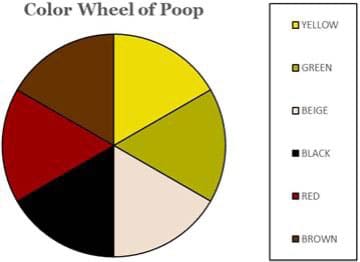
| BROWN | Solid, formed stool is normal. If it is loose, it may be the sign of a parasite and require treatment. |
| YELLOW | Mustard-yellow stool is normal when being bottle fed, but if it is extra smelly it may be a sign of a parasite. |
| GREEN | Green stool may indicate infection and require an antibiotic. |
| BEIGE | Pale stool may indicate a lack of being able to absorb nutrients properly. |
| BLACK | Black, tar-like stool typically indicates upper GI bleeding. Kitten needs to be seen ASAP for diagnostics. |
| RED | Red stool can mean problems in the lower GI from an infection or something more serious. Kitten needs to be seen. |
Bottle Babies
Kittens from birth to 4 weeks are considered neonates and need more extensive care than those who are older than 4 weeks and already weaned. Kittens are typically weaned around 5 weeks old when they begin to eat solely kitten food and are no longer taking a bottle or nursing from their mother.
Proper care of neonate kittens is vitally important to their health and wellbeing. Here are some guidelines to follow, as well as a discussion of proper techniques to ensure they are being provided with the best care possible.
Special Neonate Supplies
Below are some basic supplies you will need before you begin caring for neonatal kittens.
- Syringes
- Bottles
- Nipples
- Breeder’s Edge/KMR Formula
- Small scale
- Heating pad/disc
- Crate
- Blankets
Nothing’s better than Mom!
If you are lucky enough to have a mom along with your kittens, congratulations! She will make sure that her kittens are fed, cleaned, and kept safe. Kittens that can stay with their mamas at least 4 weeks have a better chance at survival as long as the mamas are well-cared for. As the mamas are providing food for their kittens, they require more food and they need to be fed kitten food, as it is higher in protein and nutrients.
So, when mom’s around, what do you get to do? Plenty! While it is best to do minimal disturbing the first week or so, mom and babies do need to be checked on. You will need to make sure that mom is eating, drinking and eliminating regularly. You will want to check that all the babies are getting the chance to nurse and gaining weight. Kittens should be weighed every day. Sometimes, smaller kittens will miss out by being pushed out of the way and may need supplemental feeding, or alone time with mom to nurse.
As the kittens reach 4-5 weeks of age, weaning will begin. This is the stage where the kittens transition to kitten food and away from nursing. Once the kittens are eating on their own, Mom’s job is done and she can be scheduled for spay and made available for adoption.
Feeding Bottle Babies
Bottle feeding is an acquired skill, so be patient and don’t give up! Kittens have special needs and nutritional requirements and therefore require formula specific to kittens, i.e. Breeder’s Edge or KMR, in either powdered or liquid form. Once opened, you will need to keep the formula refrigerated. Formula that has been made should be tossed after 24 hours. When mixing formula, be sure to eliminate any clumps using a whisk or similar item to make it as smooth as possible. Formula should be a warm, comfortable temperature, but not too hot as to scald the kitten’s throat so it’s best to use warm water to heat it up rather than place the formula in the microwave. A mug full of hot water can act as a “bath” for a prepared formula bottle and heat it slowly.
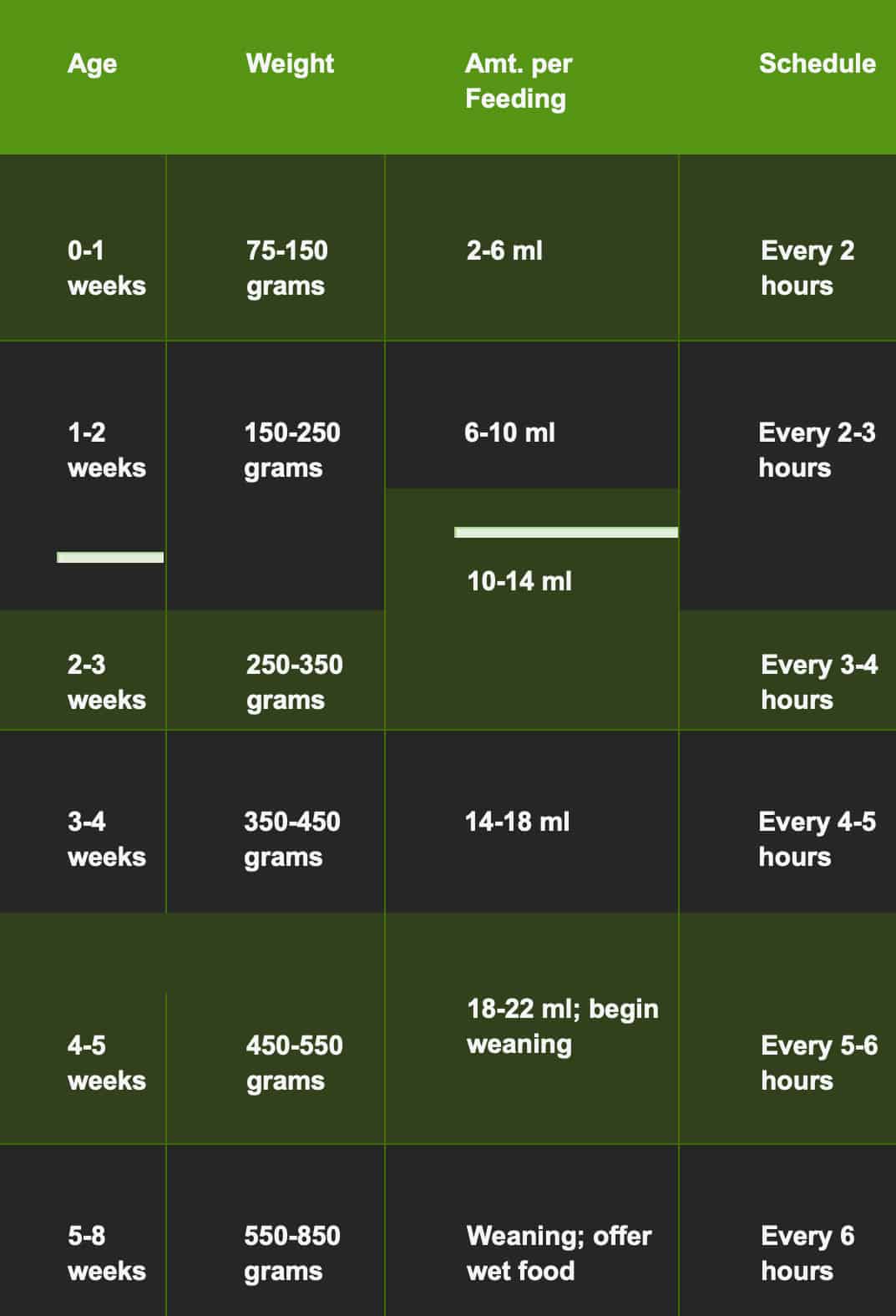
Although each kitten is different, the chart below is a general guideline for making sure your kitten is eating enough each day based on age and weight. It also details how often your kitten should be feeding.
Kitten Weight and Feeding Chart
Weigh In
Weight gain is one of the most important indicators of health for kittens, so it is essential that fosters monitor their kittens’ weight daily. While it only takes a few minutes a day, its importance cannot be overstated. You are welcome to use your own system to track your kitten’s weight, or use the sheet provided in this manual.
Weaning
Around 5 weeks of age is when kittens are ready to be weaned on to solid food. Most mama cats will start pushing kittens away from nursing and nurse less frequently when their kittens reach this age. You may also notice them starting to show interest in mama’s food, and her trying to “get away from them” more often, enjoying her solo time. The kittens’ teeth are starting to come in, and they are now able to chew and digest/absorb solid food.
If kittens are weaned too early, it can result in their bodies not being able to properly digest the food that is being offered and puts them at risk of vomiting, diarrhea, weight loss, and dehydration.
Managing Kitten Body Temperature
Kittens are unable to regulate their own body temperature at this young age so blankets and heat sources are essential. Kittens should never be placed directly on heating pads/discs. Instead, a blanket or towel should be placed between the kitten and heating source. Kittens should also have enough room in their area to move off the heating source. Kittens will move enough on their own to move on and off the heating source as needed. When kittens are with their mothers, their mothers provide body heat to keep them warm, but when they are without their mother, they can become hypothermic quickly. Alternative heat sources are critical until kittens are 4 weeks of age. These include electric heating pads, microwavable heating discs, rice bags, single-use hand warmers, or incubators.
Below is a list of average body temperature based on kitten’s age:
Age 0-2 weeks: 95-99° F
Age 2-4 weeks: 97-100° F
Age 4+ weeks: 99-101° F
Using the Bathroom
One thing to keep in mind with kittens 3 weeks of age and younger is that they are unable to use the bathroom on their own. If the kittens are with their mama, she takes
care of this by using her tongue to lick them and keep the kittens clean and comfortable. If the kittens are orphaned, they will need your help. Stimulating a kitten to use the bathroom is a necessity and should be done every few hours; especially before and after they have eaten from a bottle.
To stimulate the kitten to use the bathroom, use a cloth like a tissue, cotton ball, or gauze pad that will be soft and gentle on the delicate skin of a kitten’s bottom. Simply hold the kitten steady with one hand, and gently rub the genital region with your cloth. Continue this stimulating motion until the kitten has finished and wipe with a moist cloth or baby wipe. Take care to wipe the surrounding skin clean as prolonged exposure to urine/feces can irritate their delicate skin.
Please carefully monitor the poop of the kittens in your care. Kittens can become dehydrated very quickly and this can lead to decline, or even death. Poop is an important indicator of a kitten’s health.
Common Medical Illnesses and Health Issues
- Diarrhea: Diarrhea is quite common in kittens, and has many causes from food changes, viruses, and stress, to overfeeding, bacteria and parasites. It does need monitoring, as it can quickly lead to dehydration in kittens as they are so small.
○ If a kitten is still active with mild diarrhea that has not lasted more than 24 hours, that is generally nothing to be concerned about.
○ Severe diarrhea that lasts over 24 hours, where the kitten may be lethargic or just not acting “right,” needs medication or a visit with the foster coordinator or medical staff.
- Parasites: Parasites live in the intestines of kittens and other animals, and are commonly found in stool or vomit. Dewormers can rid them of these parasites, and are given every 2 weeks after the kitten is over 1 pound.
- Vomiting: Vomiting is not uncommon in kittens and is usually not serious. However, if a kitten is vomiting continuously it does need to be seen right away by the foster coordinator or medical staff.
- Eye Discharge: Some discharge or crustiness in the corner of the eye is normal. If there is drainage from the eye, green or yellow discharge, or swollen eyes, that is an indicator of an infection and will need to be treated with medication. Contact the foster coordinator.
- Ear Mites: Ear mites are a parasite that live in the ear canal of cats and kittens. If you notice continuous scratching, head shaking or brown discharge in your kitten’s ears, that could be a sign of ear mites. They are contagious and need to be treated ASAP. Ear mites are treated with the same medication used for fleas and ticks, so as long as monthly appointments are made for flea treatment, this should not be an issue.
Criteria for emergencies
What constitutes a medical emergency in a kitten? A good rule of thumb is any situation in which you would call 911 for a person. Here are some specific symptoms that could indicate an emergency:
■ Not breathing or labored breathing
■ Symptoms of parvovirus: bloody diarrhea, vomiting, weakness, high fever (above 103.5 degrees)
■ Signs of extreme dehydration: dry mucous membranes, weakness, vomiting, tenting of the skin (when the skin is pulled up, it stays there)
■ Abnormal lethargy or unable to stand
■ Unconsciousness or unable to wake up
■ Cold to the touch
■ Broken bones
■ Any trauma: hit by a car, dropped, stepped on
■ A large wound or profuse bleeding that doesn’t stop when pressure is applied
If your foster pet displays any of these symptoms, please follow the emergency protocol. If the animal is vomiting or has diarrhea, but is still active, eating and drinking, you can probably wait until the next day to get help.
Pregnancy, Neonatal and Kitten Care for Fosters
Expectant mothers are sent to foster with kitten food. It is usually safe to let her eat as much as she wants, as she needs the extra nutrition to support her pregnancy and prepare for nursing. Milk should start appearing in the mammary glands about a week before delivery.
Most mothers, even first-timers, can take care of themselves and their offspring quite well. A whelping box or nesting area (a litter box lined with old sheets or towels is perfect) should be readied about a week before her expected delivery date. The bed should be warm (we provide a safe heating element), and you can throw a sheet over the cattery to give mom some privacy while she delivers.
For the most part, you will leave mom and babies alone while observing for signs of trouble.
There are warning signs during labor and delivery that indicate the need to consult a veterinarian. Watch for excessive restlessness and frequent unproductive straining, or depression and inactivity. Note that cats can deliver perfectly normal kittens 24 hours or more hours apart, resting, eating and even nursing in between kittens. The most important thing is to look at is the condition of the mother. If she is depressed, sick, in pain, agitated, or straining unproductively for more than a couple of hours, please call us.
If you are concerned or uncertain about the situation, contact the Foster Care Management Team so that we can advise you correctly during this very delicate time.
Young Kitten Care
A kitten’s survival depends on getting enough nutrition, water, and warmth. If you hear crying, think hunger, thirst, cold, or all three. The mother’s colostrum, the first milk produced, is vitally important to the newborn’s cardiovascular system and defense against disease. So-called “Fading Puppy or Kitten Syndrome” where the newborn fades and dies despite adequate care, is usually either due to a genetic defect or not getting enough colostrum early enough to get the full benefit. Colostrum is rich in antibodies against various infections, but kittens can only absorb the antibodies and get the full benefit for a short period after birth. For this reason, it is very important that newborns nurse as soon as possible after birth. If they do not find a nipple, put their mouth close to one and hold them until they nurse.
Continued healthy-nursing behavior is crucial for kitten survival. In order to tell if the kittens are
nursing, put on gloves and gently pick up each kitten and feel for a round belly full of milk. A flat or concave belly indicates that the kitten may not be nursing. This check should be performed once or twice a day. Don’t forget to wear your surgical gloves. Also, confirm visually that each kitten is actually LATCHING to mom to ensure they’re nursing. A gram scale works great to log each kitten’s weight in your foster notebook. Healthy kittens should gain a little weight each day.
Signs That Kittens Are Not Doing Well
Kittens should eat or sleep 90% of the time during the first two weeks. If they are crying during or after eating, they are usually becoming ill or are not getting adequate milk. A newborn kitten is very susceptible to infections and can die within 24 hours. If excessive crying occurs, the mother and entire litter should be examined by a veterinarian, so please call us immediately.
Supplement Feeding Bottle Babies
When adequate nursing isn’t possible, supplemental feeding one to three times per day is
recommended and should be performed on any litter with more than five kittens. We will supply you with liquid or powdered KMR for supplemental feeding. The KMR’s temperature can be tested on your forearm and should be about the same as one’s skin. The KMR can lists directions concerning feeding amounts. If the kittens are still nursing from their mother, the amounts recommended will be excessive. Generally, 1/3 to 1/2 of the listed amount should be the daily goal. Supplemental feeding may be continued until the kittens are old enough to eat kitten food. Do NOT hold them on their backs like a human baby OR squeeze the bottle while feeding as they can aspirate on the milk, choke, and catch pneumonia.
If the mother does not produce milk or her milk becomes infected, the kittens will also cry. If this occurs, the entire litter could die within 24 to 48 hours. Total replacement feeding, using the KMR, or adopting the kittens to another nursing mother is usually necessary. If replacement feeding is chosen, the amounts of milk listed on the product should be fed. Kittens less than two weeks of age should be fed every 3 to 4 hours. Kittens 2 to 4 weeks old do well with feedings every 4 to 6 hours. Don’t feel like you have to wake them up to feed—if they’re full enough to sleep peacefully, let them rest until they wake up hungry.
Orphaned Kittens
If you are fostering orphaned kittens, or mom is unable to care for her babies, it is necessary to stimulate kittens of less than two weeks old to urinate and defecate in addition to bottle feeding KMR. The voiding reflex is normally initiated by the mother licking the kitten’s ano-genital region. The fosterer must therefore imitate this by gently massaging the kitten’s ano-genital area with a moist cotton ball. This should be done after each feeding, and each kitten should pass urine and have a bowel movement at least once a day.
Please note that some kittens (up to 1 out of 4 in the first week alone) will die no matter how well you take care of them. Be assured that if you tried to give them whatever you knew or thought they needed, you should not blame yourself if this happens. In the unfortunate case of a kitten passing away contact the Foster Care Management Team as soon as possible. If you are unsuccessful at reaching us, please place the body in a bag and keep it in a freezer until you have time to drop the body off at the Bideawee Adoption Center’s medical office.
Daily Routine for First-Time Kitten Foster Parents
Fostering a kitten for the first time involves a daily routine that includes feeding, cleaning, and monitoring your foster kitten’s health and well-being. Here’s a detailed guide to help you get started:
Part 1: Caring for your foster kitten
Feeding:
- Feed the kittens wet food- three times a day, morning, noon, and evening. 3oz can size half per kitten 3x times a day.
- Make sure they have a bowl of dry food and water available to them all day.
- Clean and remove dirty food dishes after each meal.
- Monitoring: Keep an eye on their appetites to ensure they’re eating well, whether they are eating less or refuse food entirely
Litter Box/Cleaning:
- Scoop the litter box at least twice a day.
- Litter Type- you will either be given clay or pellet litter depending on what the kitten uses/needs. Non-clumping is MOST important!
- Make sure to keep the litter box clean and do at least once a week deep cleaning **Super important if super messy or has parasite– that it is clean more frequently** – wash it with mild soap and warm water. Refill fresh litter.
- Use cat attract if they are having issue with the litter box
Clean litter box=healthy kitten
Health Monitoring:
- Give your kittens a daily check-up to spot any signs of illness or changes in behavior.
- Inspect their bodies and fur for abnormalities. Any missing patches of fur??
- Pay close attention to their eyes, mouth, and ears: Any eye or nasal discharge?? any sneezing or coughing?
- Monitor their energy levels for any noticeable shifts.
Monitoring Urination & Stool:
Urine: Monitor for normal frequency and quantity. Watch for any signs of straining, blood, or urinating outside the box, which could indicate health issues.
Stool: Look for consistency in your kitten’s stool. Healthy stool should be firm but not too hard. Loose stools, diarrhea, or constipation may indicate dietary or health issues.
Behavior: If the kitten suddenly stops using the litter box, it may signal stress, a dirty box, or a medical problem.
If you notice anything unusual (changes in eating, drinking, litter box habits, or behavior) message the foster phone line 347-474-9114
Part Two: Caring for Your Kittens
Safe space: Provide a quiet space in a small room, this can either be your bathroom or room. You want to be able to know where they are and also helps them get to know you and the area better
Playtime and Stimulation:
- Engage kittens in one to two play sessions daily with interactive toys (more if possible!).
- Avoid encouraging play with your hands.
- Do not leave interactive toys unattended with the kittens.
- Provide safe toys like ping pong balls for solo play at all times.
- Occasionally change their environment by adding new elements, such as cardboard boxes, or rearranging the room.
Socialization:
- Spend at least two to three 20-minute sessions daily socializing with the kittens.
- For undersocialized kittens, increase this to three to four sessions.
- Encourage affectionate behaviors during your interactions.
- If possible, introduce them to new people a few times a week.
Handling and Gentling:
- Medium and long-haired kittens benefit from brief daily brushing sessions.
- Gently handle their paws to prepare them for nail trims.
- Gradually get them used to being picked up and handled.
IN CASE OF EMERGENCY: Please call foster phone line and leave a message 347-474-9114
First-Time Foster Cat Routine
Fostering a cat for the first time involves a daily routine that includes feeding, cleaning, and monitoring your foster cat’s health and well-being. Here’s a detailed guide to help you get started:
- Feeding Routine (2x a day)
- Type of Food: Follow the feeding instructions— This will typically include wet food, dry food, or a combination. Cats in shelter are usually eating science diet unless instructed otherwise
- Meal Times:
Morning: Offer half of the daily food portion in the morning, typically around 7-8 AM
Evening: Offer the other half in the evening, around 5-6 PM.
- Water: Fresh water should always be available. Refill the water bowl daily and ensure it’s clean.
- Monitoring: Keep an eye on your foster cat’s eating habits. Note if they’re eating less or more than usual, or if they refuse food entirely.
- Litter Box Management
Setup:
Place the litter box in a quiet, easily accessible location. Avoid high-traffic areas or placing it near food and water bowls.
Cleaning Routine:
Daily Scooping: Scoop the litter box at least twice a day (morning and evening) to remove solid waste and urine clumps. This helps control odors and keeps the cat comfortable.
Weekly Deep Cleaning: Empty the litter box once a week and wash it with mild, unscented soap and warm water. Refill with fresh litter.
**Super important if super messy or has parasite– that it is clean more frequently**
Litter Type: Use the litter the cat is familiar with, and ensure you have enough for regular refills.
Monitoring Urination & Stool:
Urine: Monitor for normal frequency and quantity. Watch for any signs of straining, blood, or urinating outside the box, which could indicate health issues.
Stool: Look for consistency in your cat’s stool. Healthy stool should be firm but not too hard. Loose stools, diarrhea, or constipation may indicate dietary or health issues.
Behavior: If the cat suddenly stops using the litter box, it may signal stress, a dirty box, or a medical problem.
- General Cleaning & Grooming
Daily Tidying:
Bedding: Check and shake out bedding daily, removing any hair or debris. Replace or wash as needed.
Toys & Play Areas: Clean up toys and ensure the play area is free of hazards.
Weekly Cleaning:
- Bedding & Soft Surfaces: Wash the cat’s bedding, blankets, and any soft toys weekly.
- Scratching Posts: Wipe down scratching posts to remove loose fur and dust.
- Grooming: Depending on your foster cat’s needs, brushing can be done once or twice a week, especially for long-haired cats. This prevents matting and reduces shedding.
- Health Monitoring
- Behavior: Observe your foster cat’s behavior daily. Changes in activity level, grooming habits, or social interactions can indicate stress or health issues.
- Eyes, Ears, Nose: Keep an eye out for any discharge, redness, or swelling in the eyes, ears, or nose. Any sneezing?? Any coughing? These could be signs of infection.
If you notice anything unusual (changes in eating, drinking, litter box habits, or behavior), message the foster phone line 347-474-9114
- Socialization & Enrichment
Daily Interaction: Spend time with your foster cat every day, even if they are shy. Gentle petting, talking, or just being in the same room helps them adjust.
Play: Engage in interactive play sessions to stimulate your foster cat mentally and physically. Wand toys, laser pointers, and balls are good options.
Safe Space: Provide a quiet and safe space, like a room or a cozy corner, where your foster cat can retreat to when they need downtime.
By following this routine, you’ll help ensure your foster cat is comfortable, healthy, and ready for a future forever home
General Handling Principles (All Animals)
- Move calmly and predictably. Sudden movements or loud voices can frighten animals and trigger defensive behavior.
- Approach at their level. Avoid looming over an animal; crouch or sit nearby and allow them to initiate contact when possible.
- Use positive reinforcement. Treats, praise, and gentle touch help create positive associations.
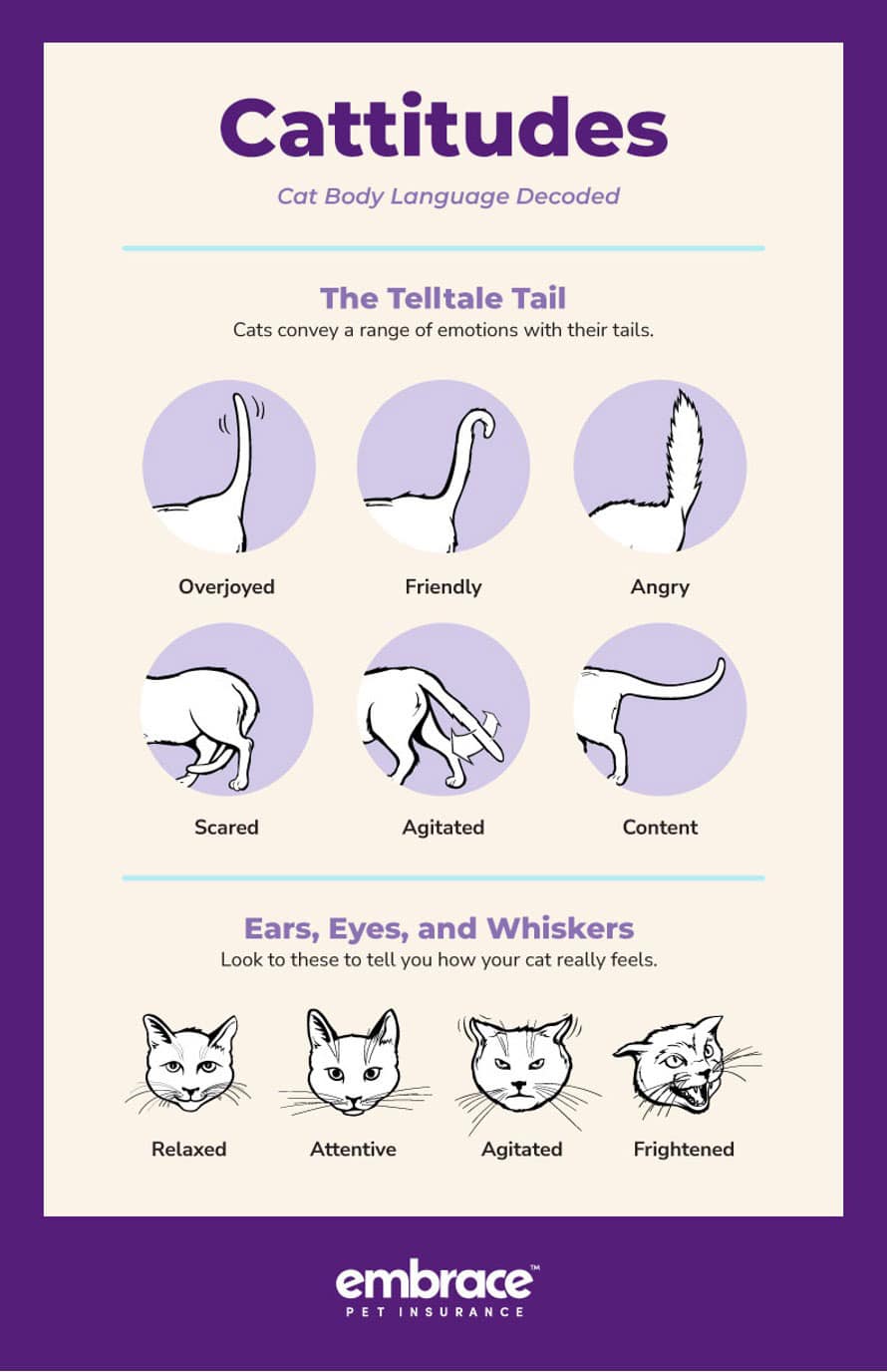
- Respect body language. Stop immediately if the animal shows signs of stress (growling, hissing, tail tucked, ears back, stiff body).
- Never use force. No scruffing (except in emergencies), alpha-rolling, tail pulling, muzzle grabbing, or punitive corrections.
- Ensure safety first. When unsure, use barriers, leashes, carriers, or towels to minimize risk to both the animal and handler.
Handling Cats
Approaching a Cat
- Begin by speaking softly and blinking slowly.
- Offer your hand to sniff from a few inches away; avoid reaching over the cat.
- Let the cat choose contact—many prefer head or cheek rubs first.
Picking Up & Carrying
- Only lift a cat if they are comfortable being handled.
- Support the chest with one hand and hindquarters with the other; hold close to your body.
- Avoid scruffing unless required for medical safety and performed by trained personnel.
Using Carriers
- Place carriers in living spaces to normalize their presence.
- Encourage cats inside with treats or toys—avoid forcing them in.
- For fearful cats, use the “towel burrito” method if needed (gentle wrapping for safe transfer).
Special Considerations
- Shy/feral-leaning cats: Do not attempt to pick up; rely on slow, non-contact bonding (food, play, scent swapping).
- Overstimulation signs: Tail flicking, skin rippling, sudden stop in purring, ear flattening—end petting immediately.
- Multi-cat foster homes: Provide multiple escape routes, vertical spaces, and separate resources.
Humane Handling of Cats: How To Do 4 Safe & Effective Holds | ASPCApro
Common Diseases in Foster Kittens/Cats
- Upper Respiratory Infections (URI)
- What It Is: A contagious viral or bacterial infection causing sneezing, nasal discharge, watery eyes, and lethargy.
- Risk: Contagious to other cats, especially unvaccinated ones. Does not affect humans.
- Feline Panleukopenia (FPV)
- What It Is: A severe and highly contagious viral disease caused by the feline parvovirus. Symptoms include vomiting, diarrhea, fever, and dehydration.
- Risk: Can spread to unvaccinated cats through contact with bodily fluids or contaminated objects. Does not affect humans.
- Ringworm
- What It Is: A fungal infection of the skin, hair, and nails, causing circular patches of hair loss and scaly skin.
- Risk: Contagious to other animals and humans through direct contact or contaminated surfaces.
- Feline Leukemia Virus (FeLV)
- What It Is: A viral infection that weakens the immune system and can lead to cancer or other illnesses. Spread through saliva, urine, or shared bowls.
- Risk: Can infect cats; no risk to humans.
- Feline Calicivirus (FCV)
- What It Is: A viral infection causing respiratory symptoms, oral ulcers, and joint pain
- Risk: Contagious to other cats; no risk to humans.
- Feline Herpesvirus (FHV-1)
- What It Is: A viral infection causing eye ulcers, sneezing, nasal discharge, and congestion.
- Risk: contagious to other cats; no risk to humans.
- Giardia
- What It Is: A parasitic infection of the intestines causing diarrhea, weight loss, and dehydration.
- Risk: Can spread to other cats and humans through contaminated water or feces.
- Coccidia
- What It Is: A parasite that infects the intestines, causing diarrhea, weight loss, and dehydration.
- Risk: Contagious to other cats through fecal contamination; generally not a risk to healthy humans but can affect immunocompromised individuals.
- Intestinal Parasites
- What It Is: Worms such as roundworms, hookworms, and tapeworms that cause diarrhea, weight loss, and a bloated stomach in kittens.
- Risk: Can spread to other pets and, in rare cases, humans (e.g., roundworms and hookworms).